
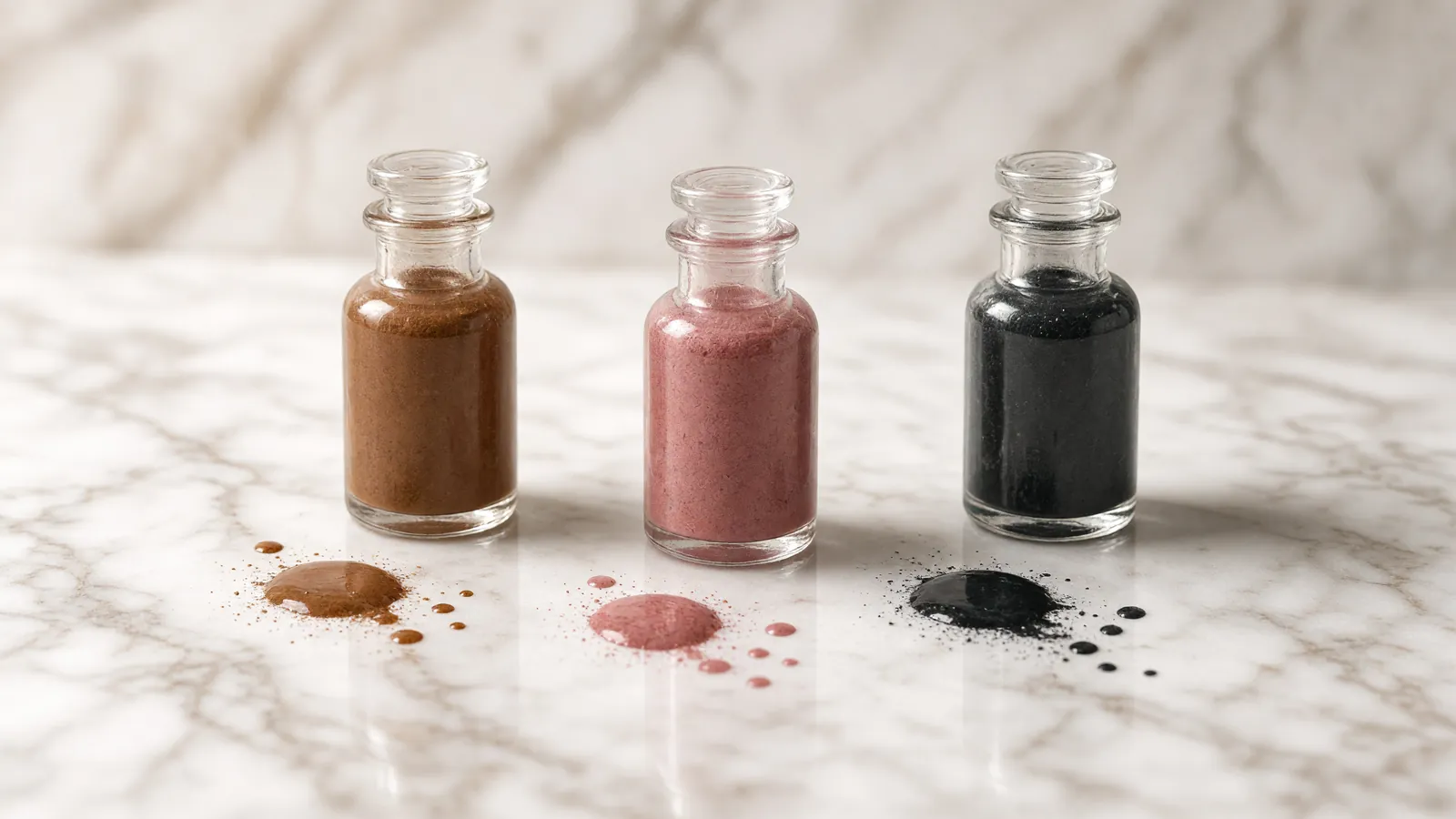
Color theory for skin
Undertones, pigment choice, and why healed color can shift over the years.
Last reviewed Nov 16, 2026 · General information, not medical advice.
Undertones
Cool undertones lean pink, red or blue. Warm undertones lean peach, yellow or gold. Neutral is a mix. Artists read undertone in person, in good light.
Choosing a brow color
Many trainers teach that pigment is chosen mainly for the skin, then checked against hair color. As a general guide, blonde hair often suits light taupe or a neutral light brown, brunette hair a medium neutral or warm brown, and black hair a dark brown rather than true black.
Why healed color shifts
- Depth. Pigment placed too deep can look grey or blue through the skin.
- Fading order. Warm pigments often fade first, so brows can drift cooler and ashier over the years.
- Sun. UV fades pigment. Sunscreen on healed work helps it last.
- Undertone. Cool skin with a very ashy brown can heal grey; warm or olive skin with a red-leaning brown can heal warm.
- Old work. Faded salmon or blue-grey tattoos usually need correcting first.
Correcting color
Artists use the color wheel: warm tones to balance ashy or blue-grey, and green or olive tones to balance red or salmon. Correction is planned at the consultation.
Keep reading
Brow techniques, decoded
Hand strokes, machine strokes, powder and combination: what each one is, and who it tends to suit.
HealingHealing, day by day
What to expect from the first day to the settled look, and the aftercare most artists give.
Touch-upsTouch-ups and color boosts
Why the second session matters, and how to keep color looking fresh.